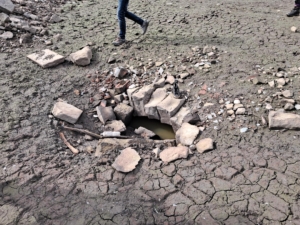
Horrobin Mills / Jumbles Reservoir
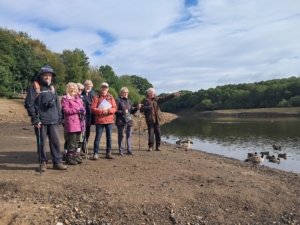 8 of us has a good look around the Jumbles Reservoir today at “low tide” to try and look out for any remains of the Horrobin Mill buildings.
Horrobin Mill now lies beneath the reservoir and was a site that spanned either side of Bradshaw Brook. A bleachworks existed here from the 1780s onwards, but expanded significantly in the Victorian age. Initially two separate factories, it merged into one extensive site. Such was the demand for water that a consortium of bleachers constructed a reservoir further north in the valley. This was Entwistle Reservoir and it served the needs of the bleachworks for 25 years. In 1863, it was compulsory-purchased by Bolton Corporation for drinking water so a new reservoir was required for the industrial needs which led to the construction of Wayoh Reservoir.
 Several local wealthy families had owned Horrobin Mill but, in 1937, it was bought by the Bleachers Association, who became its final proprietors. The association also owned a rival business at Bradshaw Hall. This acquisition would not only shut down a competitor but also give them a larger share in the water from Wayoh Reservoir for their site. Horrobin Mill was finally closed in 1941, and most of its buildings demolished in 1948.
Demand for drinking water for Bolton kept growing, and even the construction of the Thirlmere Pipeline bringing water from the Lake District could not meet it. The decision was made that, along with Entwistle, Wayoh as well should be given over solely to drinking water. However to do that, a third reservoir would be needed to keep Bradshaw Brook free from debris and to supply the Croal-Irwell River complex downstream. 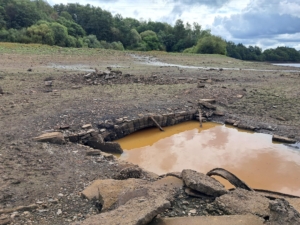 A decision was therefore made to construct Jumbles as a ‘compensation reservoir’ to fulfil this purpose. No drinking water would be taken from it. In 1964 the Horrobin Mill site was bought by Bolton Corporation for £8,500 and the remaining mill buildings demolished.
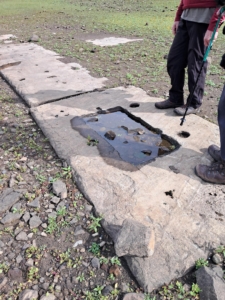
When the Jumbles is full there is no evidence of the Horrobin Mill buildings at all. When the water level is low you can see foundations and water courses. Scattered on the ground is lots of industrial “rubbish” in the form of metalwork, slates, cobbles and stones.
It was great fun looking for it all and trying to work out what it might have been!