
Guided walk around Todmorden
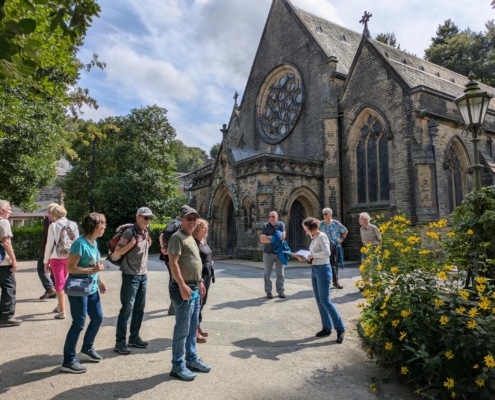
A group of sixteen Spaggers met our guide Anne Mealia at Todmorden Railway Station on a warm and sunny August afternoon.
After a brief introduction we set off on our tour of this historic Yorkshire town. Anne explained how the town did not exist until the turnpike roads were built in the 18th century. The ground would have been boggy and prone to flooding (as it still is) so people used the packhorse routes high up on the valley sides. The turnpikes allowed people and goods to travel more easily along the routes to Rochdale, Burnley and Halifax. This was important as first the wool trade then, with the introduction of cotton from America, cotton spinning and weaving became the main industries. In fact at one time Todmorden could claim to have the largest weaving mill in the country, built by the Fielden family.
Anne described how this family played a key role in Todmorden’s transformation from an agricultural to a prosperous industrial town. We admired the Grade I listed Todmorden Town Hall, built by a nationally renowned architect for the Fielden family and walked up to the magnificent Gothic Revival Unitarian Church built as a memorial to John Fielden MP.
 The completion of the Rochdale canal in 1804 meant that goods could be transported overnight to Manchester and the wharf next to the Golden Lion (on Fielden Square) became a hive of activity. A short walk along the canal past the ‘Great Wall of Todmorden’, which shores up the railway, brought us to Gauxholme railway viaduct. This skew bridge was designed by George Stephenson in 1840 and is Grade II listed.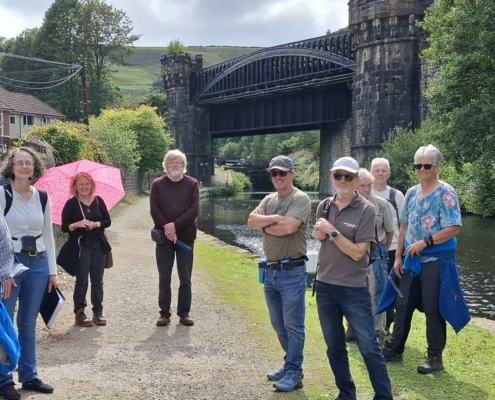
Our thanks go to Anne Mealia, a very proficient guide who delivered a most enjoyable tour fulfilling the remit of ‘Transport and Industry and the development of Todmorden’ most thoroughly.

