
We had a good turn out on a sunny Thursday afternoon for Stephen Irwin’s talk on how the American Civil War affected the people involved in the cotton trade in Lancashire. Stephen has worked as the Education Officer at Blackburn Museum for over 17 years and is an entertaining and informative speaker.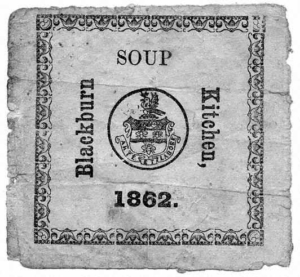
During the 1860-62 cotton famine in the UK four million out of a population of twenty million were reliant on the cotton trade for their livelihood. The cotton grown on the plantations in the Southern States of America relied on slaves to pick the cotton and bale it up ready for export to this country. Imported through Liverpool the cotton was spun and woven in Lancashire mill towns then exported all over the world. Just prior to the war there were 2650 working cotton mills in Lancashire and Cheshire. Many of these were small factories which did not survive the cotton famine. Stephen explained that this is the reason so many large mill buildings were erected in the late 1800s in Lancashire, many of which still remain today.
In 1861 75% of the cotton we relied on came from America but because of the Civil War the export of the raw cotton ceased. The Confederate Southern states thought that the British cotton workers would side with them to ensure the export of the raw cotton which was being blockaded by the Union navy. However, slavery had already been banned in England and the Lancashire people were abolitionists and supported President Lincoln and the Union. The Confederates were hoping to force the British government to come into the war on their side by hitting the textile industry but their plan failed and without our support the Union won the war.
Local mill owners, mostly nonconformist, were on the side of their workers and helped to support them during the famine by setting up soup kitchens and food distribution centres.

