
Visit to Bolton Museum
From the rain-soaked streets of Bolton we were welcomed into the sun-drenched Land of the Pharaohs by Ian, the enthusiastic and knowledgeable curator of Archaeology and Egyptology. Guiding us through the splendid exhibits Ian began by reflecting on how people have been influenced by the fascinating archaeological finds from ancient Egypt. He pointed out that not all of them are genuine, for example an alabaster figure on display, bought by the museum for a considerable amount of money, was subsequently revealed to be a fake made by a local Bolton man!
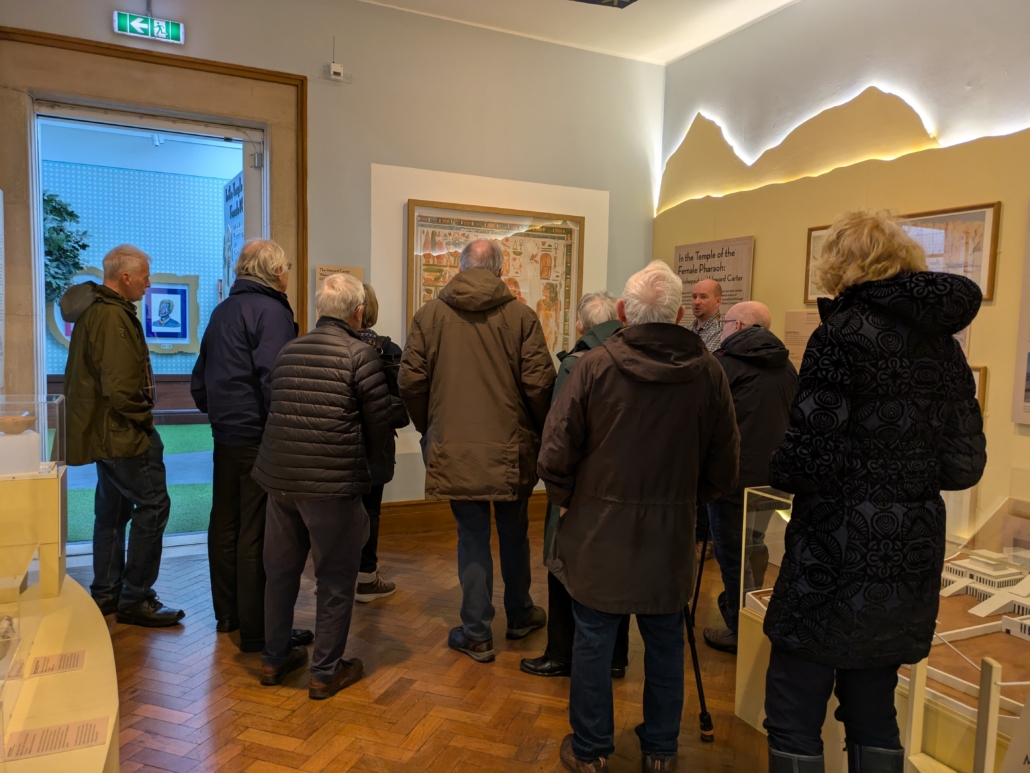
Ian then showed us into a temporary exhibition area with a display about the female pharaoh Hatshepsut and explained how unusual this was in the male-dominated Egyptian royal lineage.
Moving down through the displays we learnt how the local wildlife influenced the ancient Egyptians, not least the scarab beetle rolling a ball of dung likened to the sun god Ra ruling over the sky. Falcons, jackals, lions and serpents, especially cobras, played a large part in their imagery. We discovered on display ceramic and glass vessels, amulets and jewellery, combs and mirrors, tools and toys and an impressive display of ancient Egyptian textiles.
Ian informed us that this remarkable collection exists in Bolton Museum due to local woman Annie Barlow of Edgworth (the Barlow Institute is named after the family). She raised money for excavations in Egypt and asked for her share of the finds to be given to the Chadwick Museum, the Victorian forerunner of today’s Bolton Museum.
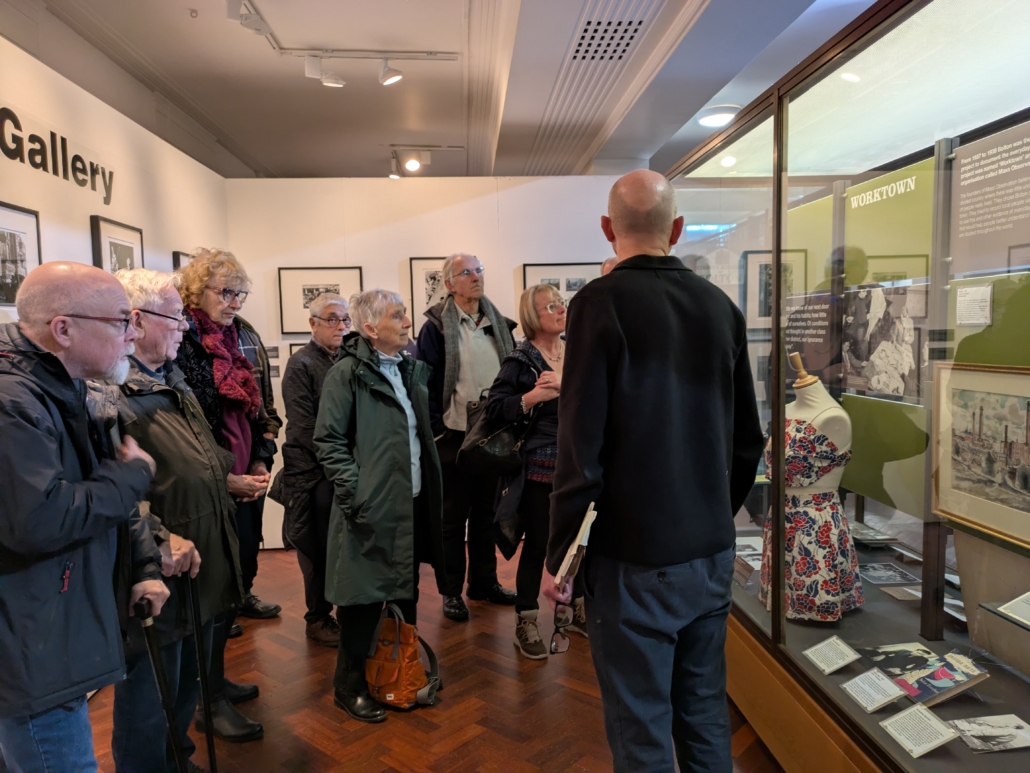
After being handed over to Matthew, Curator of Art and Social History, we began exploring the History of Bolton Gallery. We learnt how Bolton developed from a small town to a thriving metropolis after Samuel Crompton’s invention of the Spinning Mule in the late 1700s. A full-size spinning mule has pride of place in the gallery along with a portrait of the man himself.
Matthew showed us a very interesting display on the Bolton Social History Experiment. Better known as Mass Observation’s “Worktown” Project, for three years starting in 1937 paid and volunteer observers lived in Bolton where they studied slum conditions, recorded conversations in pubs, work in cotton mills, religion, political rallies and even what Boltonians got up to in their annual holidays in Blackpool. Fascinating!
No history of Bolton would be complete without mention of the Bolton Wanderers football team. At least two SPAG members had seen the famous Nat Lofthouse (the club’s record goal scorer) play at Burnden Park, albeit as supporters of other clubs. Formed in 1874 Bolton Wanderers became a founder member of the Football League in 1888. In the Golden Era in the 1920s to 1950s they won four FA cups and were in the Premier League from 1995 to 2012.
So, as you can see Bolton Museum has something for everyone. If you couldn’t make it on the SPAG visit, do try to pay a visit when you can. Entry is free and there is a pleasant cafe which sells tasty lunches to complete your day out.
