We found the site in 2020 (pre COVID), we undertook a geophys survey in 2022 and we’ve now applied for funding to start digging in March 2024.  The Dig director will be Neil Coldrick (HMHG archaeologist) who brings with him a wealth of experience.  Neil, in common with several others of that group are also […]

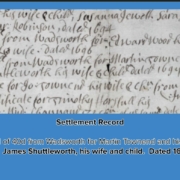
The story of how one (very minor) branch of the Shuttleworth family gradually moved the 9 miles, as the crow flies, from living in Widdop, just over the border in Yorkshire to Rawtenstall.  From the 17th century to date, via Cliviger to Rossendale, from the moors to subsistence farming,  quarries, coal pits to working in […]

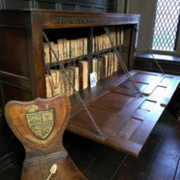
SPAG members enjoyed a guided tour on 17 November 2023 around a 600-year-old site in Manchester’s medieval quarter, and spent time in the building that would one day become “Chetham’s Library,” said to be the “oldest public library in the English-speaking world.” The original medieval building was built (to house the priests for the church […]

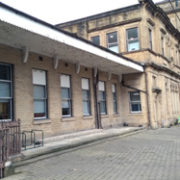
The grade 2-listed Manchester Victoria station was the venue for a SPAG tour of the station’s memorials and buildings on 17 November 2023, and for a reminder about the history of how the railway network developed in the north of England. Starting at the original 1843 Italianate station on Hunts Bank – re-named that year […]

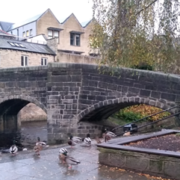
  Hebden Old Bridge   Calderdale guide David Cant led our SPAG group on an interesting and enjoyable – if wet – tour of a selection of vernacular buildings and industrial archaeology of Hebden Bridge. Starting in St George’s Square, we saw a sculpture (which doubles as a sundial gnomon) of a “fustian knife,” fustian […]

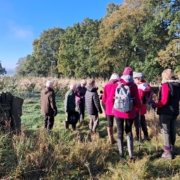
On a beautiful Autumn morning a group of a dozen industrial archaeology enthusiasts set off along the old railway track in Simonstone to the site of Constant Mary, an 18th century waterwheel.  Along the way group leader, Richard Matthews, outlined various points of interest including old water management systems and a series of mysterious raised […]

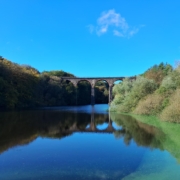
A small and select 8 Spaggers enjoyed some super autumn weather and an interesting walk from the Entwistle Dam Car Park. A very bumpy old road up to The Station Arms (a pub we all know these days as The Strawbury Duck) and Entwistle Railway station. Built in 1848, 8 miles south of Blackburn it […]

I think the best thing we can say about this is:  if you didn’t join the trip, make an effort to do it on your own.  Amazing.

Creswell Crags has the only ice age art in the British Isles. Whilst the art was originally discovered in 2003, there is little doubt that discoveries and research by archaeologists will continue for many years to come.

Having booked in at reception and enjoyed much needed refreshments in the excellent café, we had a couple of hours to explore the gorge, the wonderful museum and of course, the gift shop.
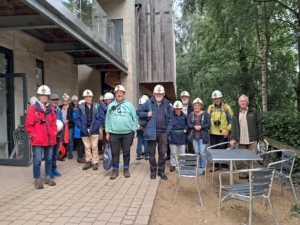
 

Intrepid Explorers

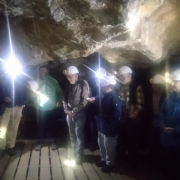
At 2pm we assembled by the stuffed hyena to meet our guide Sarah, before donning hard hats and headlights.  We walked to the largest cave, Robin Hood’ where sixteen of us were to spend the next hour entering deeper and deeper underground.

With 60,000 years of history the caves have been home to neanderthals, humans, lions, hyenas and other creatures.  The gorge has also been home to woolly mammoths and hippos.
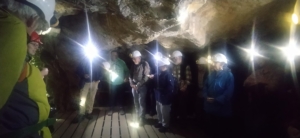
Our guide was knowledgeable, friendly and entertaining. The only downside was having to walk on a very uneven floor, downhill, bent double with only our headlights to show the way!  Fortunately we returned unscathed to move to the next chamber which is home to a large number of apotropaic marks.  These marks were believed to keep witches and other evil spirits at bay and one of our members was particularly excited as he has recently been studying them in some depth.

Finally emerging into daylight, we re-joined the rest of the group and were driven back by our now regular coach driver Paul, arriving in Helmshore about 6.15pm..

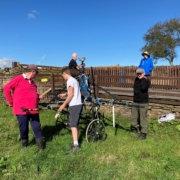
 

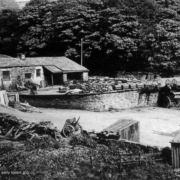
Clive gave us an insight into the working lives of the men, women and children who worked above and below ground in the mines of the Rossendale coal field.  The mines were owned mostly by mill owners who needed a steady supply of coal to power the steam engines in their mills.  It was imperative […]