
Rossendale Turnpikes
Prior to the introduction of the turnpikes, local parishes were responsible for maintaining their own roads which resulted in poor tracks leading to slow, dangerous and uncertain travelling conditions. Travelling in 1770, Arthur Young stated that the old road between Preston and Wigan was ‘Most Execrably Vile with Ruts four Feet Deep’. Or was that last year in Rawtenstall?
To create a Turnpike or toll road required an Act of Parliament, the first being in 1663 for a part of the Great North Road near London. ‘Turnpike mania’ was between 1751 to 1772 but Rossendale’s first, was the Burnley – Bacup – Rochdale route in 1755.
These were non-profit making projects financed by loans from the great and good of the area. With an initial term of 21 years all proceeds from the tolls were to be used for the maintenance and improvement of the road, in addition to repaying the original loan with interest. Few remained solvent.
Turnpikes and/or tollhouses were erected at strategic points on the road where a large board would be displayed showing the toll due for each category of traveller.
So why was Rossendale so late to join in? Colonel Fishwick, a Victorian historian from Rochdale, states that prior to the toll roads there were few roads in the area, just packhorse tracks and paths. However, from the second quarter of the 18th century, better communications were essential for the transport of raw and finished materials in rapidly increasing volumes from the new mills.
This is not to say that turnpikes were a perfect answer. Arthur Young wrote of the four good roads in England, ‘the rest it would be a Prostitution of Language to call Turnpike’!
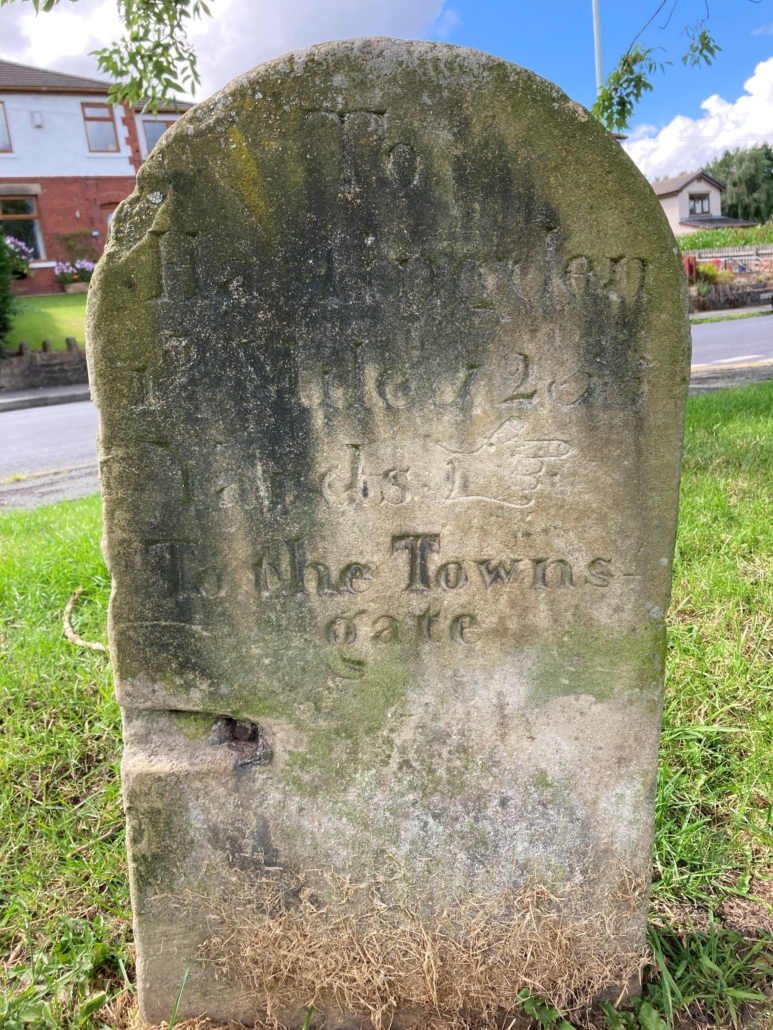
So what is left in the second quarter of the 21st century? A handful of toll houses, a few milestones and a large number of bridges. Prior to the turnpikes, most transport was done with packhorse trains, keeping to the higher ground and only descending to the valleys to to move from one to another. Crossing rivers would require fords or bridges, hence the well known term, packhorse bridges.
With the introduction of the turnpikes, roads were built in the valley bottoms providing access to water powered mills and newly developed settlements. Horse drawn wagons and coaches were now commonly used for transporting goods and people, although as previously stated, they were far from perfect! However, the meandering nature of the rivers required bridges to be built at surprisingly regular intervals.
Over the intervening centuries bridges have been rebuilt, widened, strengthened or even changed into culverts but the fact remains that they were a major investment for the Trusts. Nowadays, we drive in comfortable isolation in our modern vehicles, rarely giving a thought to the bridges which are such a vital part of the experience.
Our project is to record the artefacts remaining in 2026 and beyond, that our forbears bequeathed to us. Future generations will then have a record of what remained in our time. Why not join us?
If you would like a more academic view of turnpikes across the country we recommend this Cambridge University study.